

BTO interior design in Singapore has grown increasingly important as new flats become more compact. Whether you are preparing for key collection or planning ahead for your renovation, creating a functional home begins with smart layout ideas, storage planning and understanding how your daily habits fit into your space. This 2026 guide focuses on practical BTO layout strategies suitable for small and mid-sized Singapore homes, without overwhelming you with unnecessary technical jargon. You can also explore our recent BTO interior design projects in Singapore to see how different layouts can be optimised.
As Singapore’s living spaces evolve, homes now serve multiple roles – relaxing, working, cooking, studying, hosting and storing. That’s why thoughtful BTO renovation planning plays a major role in achieving a comfortable and well-organised home. Before comparing IDs or HDB renovation contractors in Singapore, the foundation of a good BTO renovation is understanding how to plan space effectively. Floor area may be fixed, but how spacious your home feels is very much within your control.
A well-designed BTO home almost always starts from the main communal area. The living and dining spaces are where daily life happens: watching TV, entertaining guests, working on a laptop, kids doing homework or simply resting after a long day. One of the most effective layout ideas for small BTO flats is an open-concept configuration. Instead of treating living and dining as two separate rooms, the spaces can be visually combined into one wider zone. Removing visual barriers, minimising solid partitions and aligning furniture to the walls all help the eye read the room as larger than it actually is. Slim-profile sofas, a built-in TV console with hidden storage and an extendable dining table are excellent building blocks for this kind of layout. With the right furniture scale, even a compact 3-room or 4 room HDB flat can feel generous.

Kitchens in BTO flats, especially in 2-room and 3-room units, are usually narrow, so their layout needs careful attention. Efficient configurations such as galley kitchens or L-shaped kitchens help maintain a short and practical work triangle between the stove, sink and fridge. Homeowners who cook frequently often collaborate with a kitchen renovation contractor in Singapore to design upper cabinet systems, pull-out pantry units and built-in appliance niches that make full use of vertical height. Keeping tall storage to one side and leaving the opposite wall lighter, with open shelves or glass, is a simple way to prevent the kitchen from feeling like a tunnel. Handle-less cabinet doors, integrated hobs and concealed rubbish bins further reduce clutter and support a clean, modern look, which is especially important for small BTO designs in Singapore.

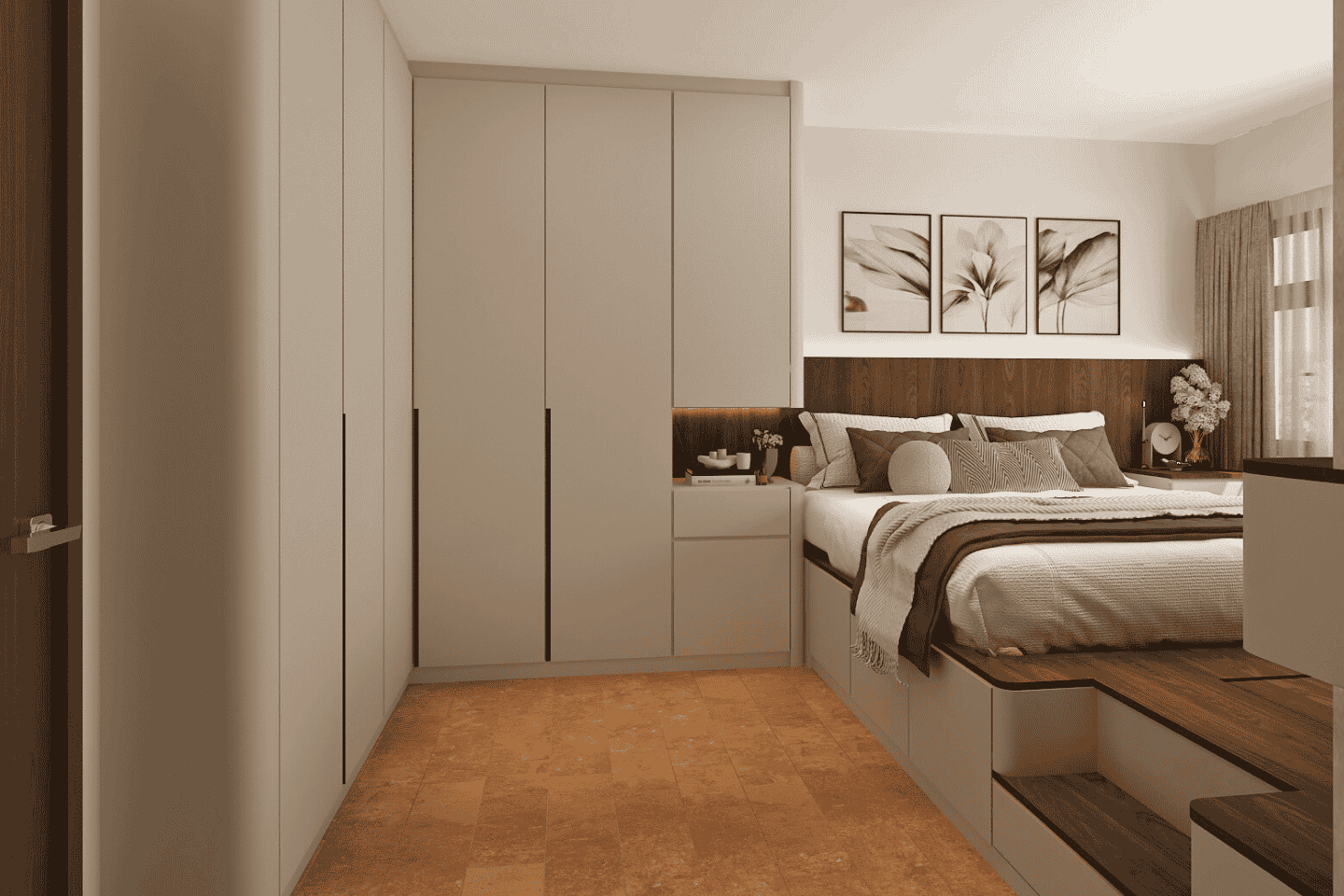
Bedrooms in BTO flats tend to be compact, so space-saving solutions quickly become your best friend. The most common strategy is combining storage and sleeping into one feature, such as a platform bed with drawers or lift-up storage. Full-height wardrobes that reach the ceiling make better use of vertical space than short standalone cupboards, and internal organisation – drawers, hanging space, pull-out trays – is just as important as the exterior design. Floating bedside ledges are often more effective than bulky side tables, especially in 3-room and 4-room layouts where walking space is limited. Mirrors placed opposite windows or along wardrobe doors can visually expand the bedroom and bounce more daylight into the room, making it feel calmer and more open.
Work-from-home arrangements have turned study nooks into a must-have feature in many BTO homes. The key to integrating a workspace into a small flat is to think of it as a “zone” instead of a full room. A built-in desk along the window, a slim study table combined with a wardrobe, or a compact work corner along the living-room wall can provide enough space for focused tasks without compromising circulation. Some homeowners use a half-height or glass partition to create just enough separation between work and rest, allowing them to mentally disconnect after working hours while still keeping the home visually open. Proper lighting is essential here: a dedicated task light, paired with warm general lighting, makes the space comfortable for long hours of use.
Bathrooms in BTO flats are compact by nature, but with the right design they can still feel bright, sleek and relaxing. Wall-hung vanities create a sense of openness by exposing more floor area, while niche shelving inside the shower provides convenient storage without protruding shelves. Large-format tiles with minimal grout lines help reduce visual clutter and make cleaning easier. Many homeowners also choose warm, hotel-style lighting, frameless glass screens and simple black or brushed-metal fittings to give the bathroom a modern, cohesive feel. The same space-saving mindset used in the living room and kitchen applies here: keep the essentials, conceal what you can, and allow the eye to travel smoothly across the room.
Long-term storage is one of the most important but frequently overlooked aspects of BTO interior design in Singapore. It is tempting to leave storage decisions to the end of the renovation process, but planning early always results in a cleaner and more functional home. Full-height cabinetry along corridors, built-in shoe cabinets with ventilation grilles near the entrance, concealed storage behind mirrors and bay-window seating with integrated compartments are effective ways to increase capacity without visually shrinking the rooms. When storage is built into the design from day one, you are less likely to accumulate mismatched cabinets later that interrupt the overall aesthetic.
Once functional planning is complete, the next step is choosing an interior style that fits your lifestyle. Popular themes for BTO renovation in Singapore include Scandinavian, Japandi, Modern Contemporary, Muji Minimalist and Industrial. Scandinavian and Muji styles use light wood tones, soft neutral colours and gentle lighting to create warm and relaxed environments, which are especially suitable for small BTO designs in Singapore. Japandi blends Japanese calm with Scandinavian simplicity, focusing on natural textures, clean lines and a curated selection of furniture. Modern Contemporary interiors are ideal for homeowners who prefer sleek built-ins, strong geometry and a timeless palette that will still feel current many years from now. Industrial designs, with their concrete textures, black frames and bolder contrasts, suit those who want more character and a slightly edgier mood while still maintaining practicality.
As you explore these themes, it is useful to remember that layout always comes before decoration. A beautiful style cannot compensate for poor circulation, insufficient storage or awkward furniture placement. That is why many homeowners eventually realise the value of working with an experienced interior designer instead of coordinating multiple renovation contractors alone. Some also opt for a design and build Singapore–based approach, where the same team handles planning, carpentry and on-site coordination, resulting in smoother communication and a more coherent final outcome. For larger or more complex homes such as executive units or maisonettes, this integrated method can be especially helpful.
While this guide focuses on BTO interiors, many of the same principles apply across residential projects, from condo renovation in Singapore to landed renovation Singapore-wide. The core idea remains the same: understand how the household uses the space, plan clear zones, maximise storage, and then layer on aesthetics that reflect the owners’ personality. A thoughtful BTO layout today also makes future changes easier, whether that means converting a study nook into a children’s area, turning a spare room into a hobby space, or adapting the home for multi-generational living later on.
Because there is so much information online, it can also be confusing to compare a 4 room HDB renovation package, a BTO interior design package and a HDB resale renovation quotation. In general, BTO flats start from a bare layout and focus more on carpentry, space planning and built-ins, while resale flats often involve more hacking, rewiring and repair. BTO owners are usually more concerned with how to make the most of fixed room sizes, whereas resale owners might be reconfiguring spaces entirely. Understanding this difference helps you ask more relevant questions when meeting potential designers or contractors.
Another key consideration is choosing the right partner. Beyond browsing portfolios and reviews, it is worth paying attention to how an interior designer listens to your lifestyle needs. A good designer should be able to show you previous BTO layout ideas in Singapore, explain why certain choices were made, and propose solutions that are realistic for your floor plan and timeline. Look for clarity in drawings, transparency in material descriptions, and a structured renovation schedule. The same level of professionalism is what businesses look for when engaging firms for commercial interior design Singapore projects or office interior design Singapore spaces – clarity, function and reliability always matter.
To avoid common renovation pitfalls, it helps to keep a short checklist in mind. Avoid overcrowding your floor plan with oversized furniture just because it looks nice in a showroom. Keep colour palettes harmonious and avoid too many strong accent walls in small apartments. Plan sufficient power points near your work areas, bedside tables and TV console to reduce messy extension cords. Use layered lighting so the home can switch between bright and functional during chores, and soft and cosy during rest. Pay attention to how doors swing and how they affect circulation, especially in tight bedrooms or kitchens. Small details like these might seem minor individually, but together they shape your daily experience of the home.
Crown Interior Design combines these principles into every BTO project we undertake. Our approach to BTO interior design Singapore is centred on practical layouts, smart storage, and clean, modern aesthetics that are enjoyable to live in. Whether you are a first-time homeowner moving into a BTO, comparing options for condo renovation Singapore-wide, or planning ahead for future upgrades, we design spaces that are meant to be used, not just photographed.
Ideally, you should begin researching and planning about six to twelve months before key collection. This gives you enough time to explore design directions, compare proposals and refine your layout.
Scandinavian, Japandi, Muji Minimalist and Modern Contemporary are particularly suitable because they favour lighter colours, clean lines and simple forms that help homes feel more spacious.
No. Only selected non-structural walls can be removed, and all hacking works must follow HDB guidelines. Your designer will advise what is feasible based on your floor plan.
Built-ins are very useful for maximising storage and keeping the home tidy, but it is important not to overdo it. The best results come from a balance of fixed storage and flexible furniture.
If you are ready to turn your floor plan into a home that fits your life, Crown Interior Design can help you map out smart layouts, storage solutions and material choices tailored to your needs. Reach out to us to discuss your BTO renovation and explore design ideas that will serve you well for years to come.